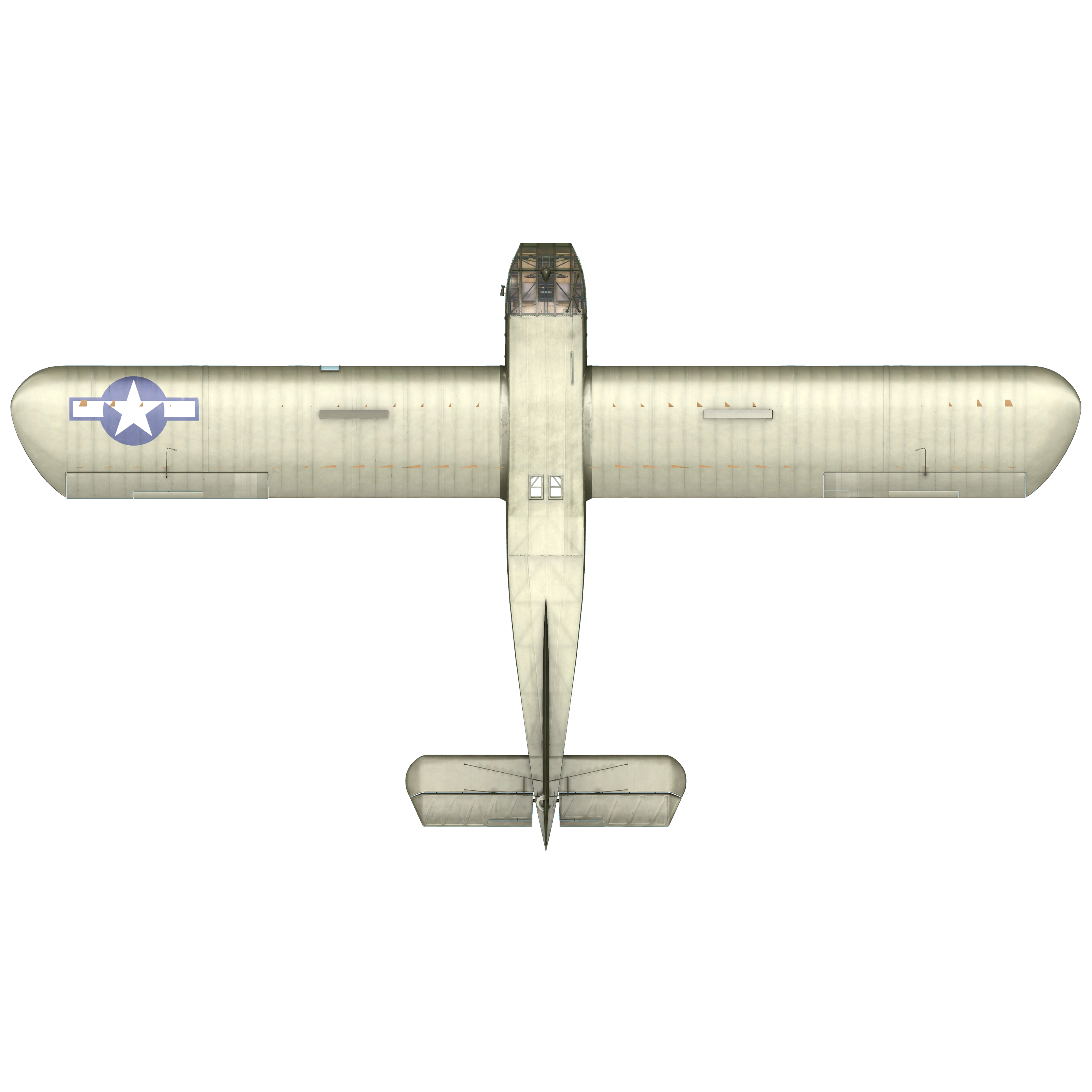
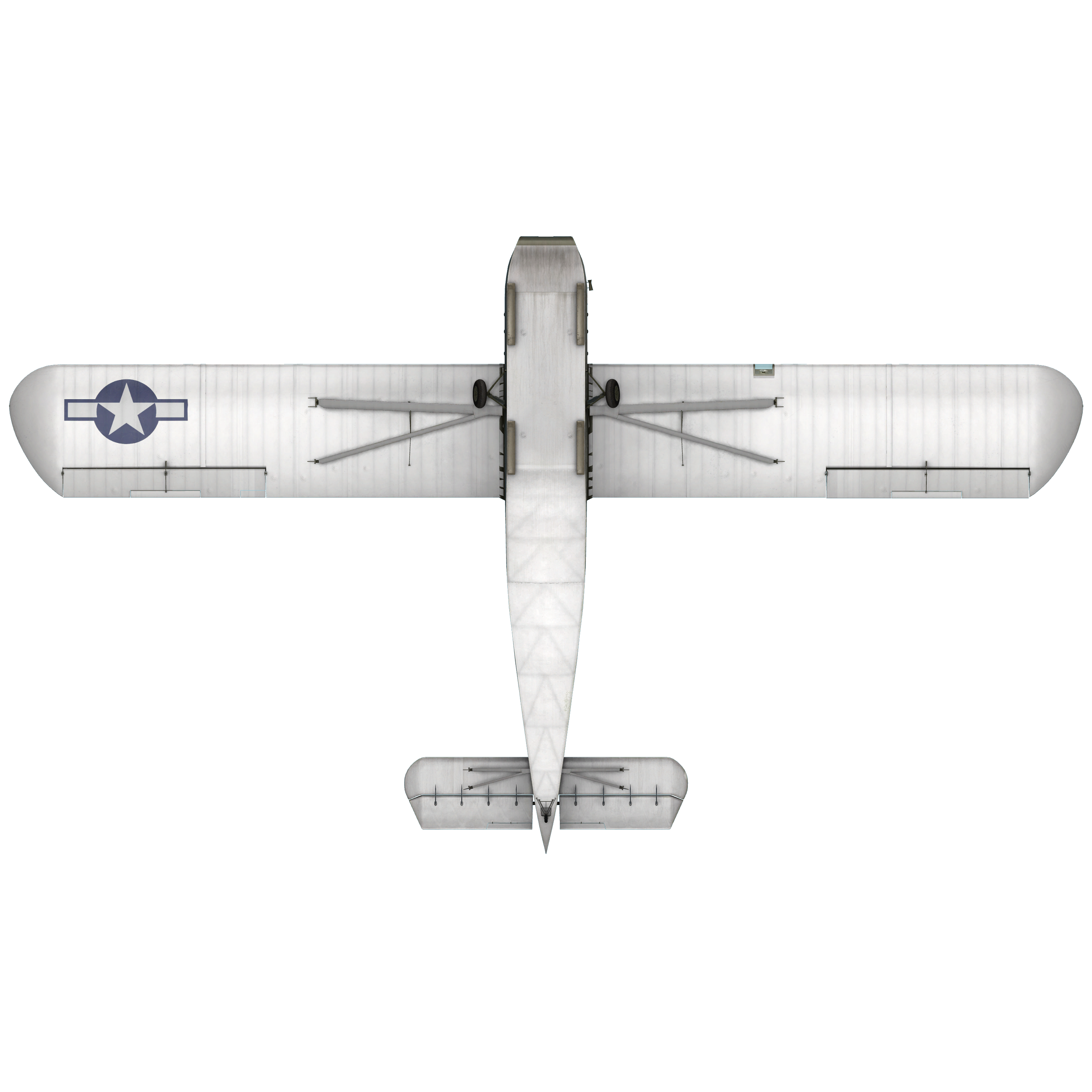
Even in the first years after the creation of airborne forces, it became clear that paratroopers could only land behind enemy lines with light weapons. Then there was an obvious solution — paratroopers capture a bridgehead, and then heavier equipment and weapons are transported to it. It was proposed to use gliders as a means of transport.
The Germans were the first to use gliders in combat: a German glider landing at Fort Eben-Emael and the landing on Crete proved that gliders could transport entire units, as well as supplies and military equipment. The United States kept a close eye on military innovations and in 1941 announced a competition for the design of gliders. The heavy glider was to have a cargo-passenger cabin for 15 people, allowing the possibility of transporting some military equipment.
The competition was won by the Waco Aircraft Company from the city of the same name in Texas. As a result, the heavy CG-4A (designated CG-4A Hadrian in the United Kingdom) was produced by Waco in 1942-1945 in cooperation with 16 contractors and became the most mass-produced glider of the war.
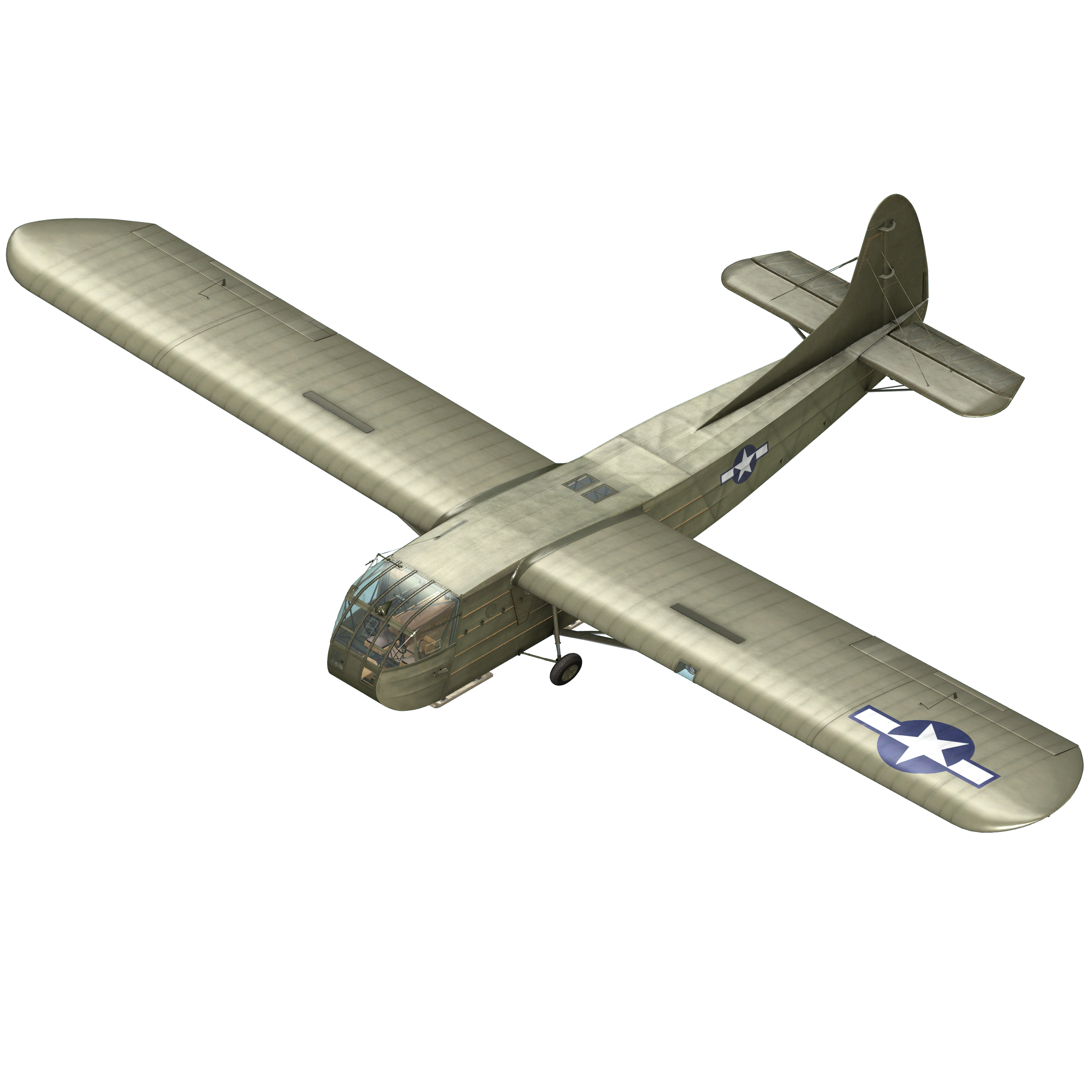
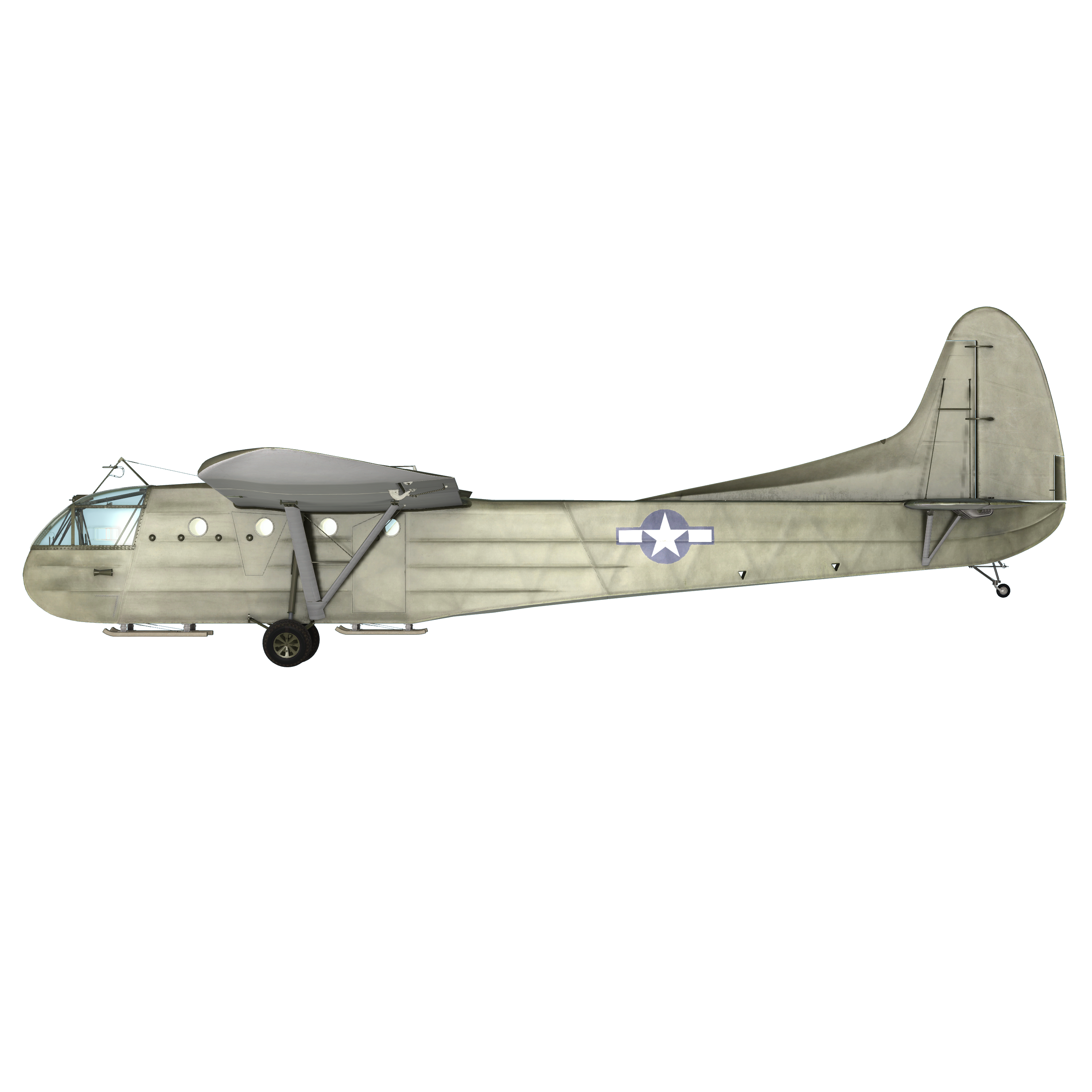
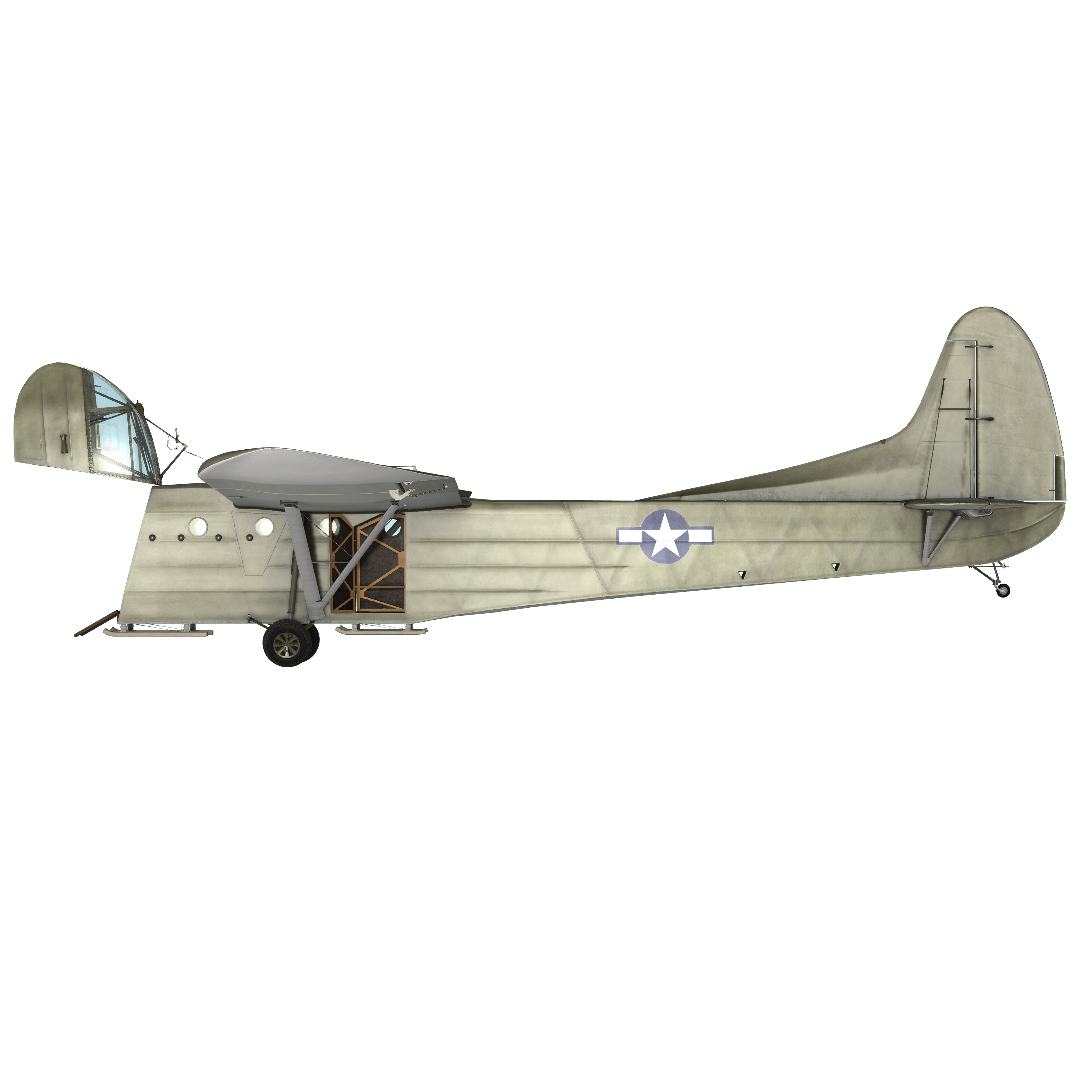
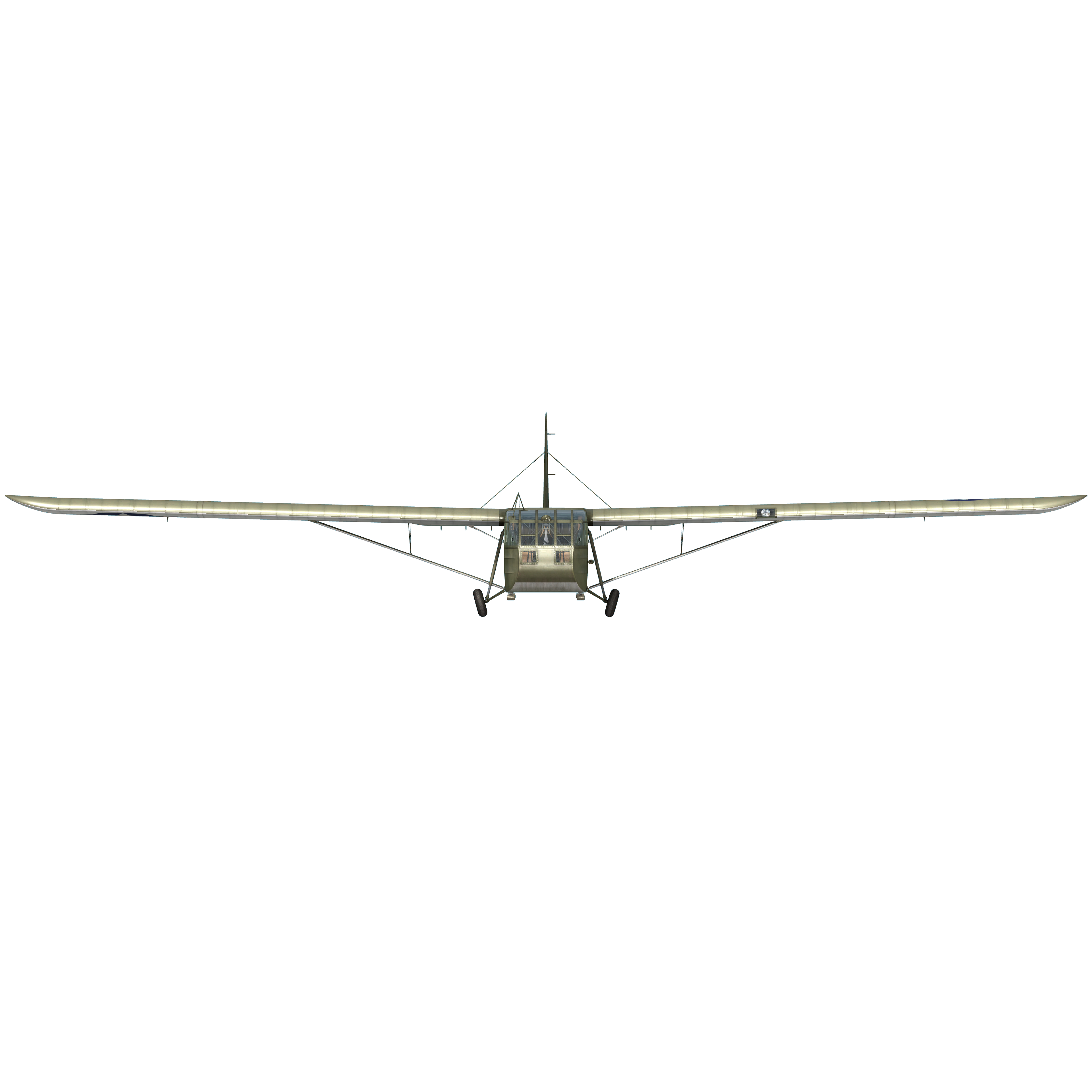
The CG-4A transport and amphibious airframe was a high-wing aircraft. The rectangular fuselage frame, welded of steel tubing, consisted of three parts. The nose section, a two-seat cockpit, had hinges in the upper part of the structure and locks in the lower part, allowing it to be tilted upward for loading and unloading. The large area glazing of the cockpit gave the pilots good visibility. The central part of the fuselage was a cargo compartment of a rectangular section formed by a tubular frame. On the cargo floor, which was lined with plywood, there were brackets for mounting removable seats for paratroopers and loops for securing the cargo with slings. In the upper part of the cockpit were the wing attachments. On both sides of the hull were cutouts for the hatchway, the escape hatch, and four circular windows. All surfaces except the floor and the bottom of the cockpit were covered with canvas. The tail section of the fuselage was a spatial truss of rectangular cross-section with stabilizer mounting nodes.
The CG-4A was designed to carry 13 fully armed soldiers and two pilots. Instead of personnel, it could carry a standard army jeep with a load of 250 kg and four soldiers, a 75 mm M1A1 howitzer with a crew and a small ammunition load, or any other load of suitable dimensions up to 1850 kg. The towing speed was up to 220 km/h, which allowed the use of C-46 and C-47 transport aircraft as towing vehicles.
A total of 13900 gliders of this type were built. They were first used in combat during the Sicilian campaign in 1943. Due to poor training, lack of cooperation, and communication, the glider landing force, which came under friendly fire from Anglo-American ships, suffered heavy losses.
In Japanese-occupied Burma, the British managed to land an amphibious assault with the help of an American air group. The British colonial troops landed in the Japanese rear and waged guerrilla warfare, and these troops were supplied by gliders, mainly CG-4As.
Gliders also participated in the famous D-Day landings in Normandy on June 6, 1944: 847 gliders, including the CG-4A, were used in this major operation. They were used both for landing infantry and for delivering jeeps with artillery.
Another operation in which gliders were used extensively was the landing in Holland. In all, more than 2,000 gliders were used in Operation Market Garden, but the enemy front held out against all expectations, and the airborne troops suffered heavy losses.
The last time airborne gliders were used during the war was during the Rhine Operation on March 24, 1945 - 900 American CG-4A gliders and 420 British gliders took part. The Rhine operation was a great success and went down in history as the largest single airborne landing.
Sources:
1. "Corner of the Sky" (airwar.ru) Waco CG-4 (CG-4A Hadrian)
2. Phenomenon of combat glider. Site https://novate.ru/blogs
3. Waco CG-4A Glider Website https://questmasters.us/CG-4A.html.
4. All about WWII. Website https://wwii.space/voennyie-planeryi-ssha)
5. "Air Landings of the Second World War", M., AST, 2003.
Indicated stall speed in flight configuration: 65..86 km/h
Dive speed limit: 241 km/h
Maximum load factor: 3.5 G
Stall angle of attack in flight configuration: 16 °
Takeoff speed: 86..113 km/h
Glideslope speed: 98..128 km/h
Landing speed: 81..106 km/h
Landing angle: 8 °
Optimal descent speed on glideslope: 2 m/s
Note 1: the data provided is for international standard atmosphere (ISA).
Note 2: flight performance ranges are given for possible aircraft mass ranges.
Empty weight: 1769 kg
Minimum weight: 2383 kg
Standard weight: 3402 kg
Maximum takeoff weight: 4082 kg
Useful load: 2313 kg
Length: 14.73 m
Wingspan: 25.2 m
Wing surface: 79.25 m²
Combat debut: July 1943
Operation features:
- The glider is equipped with a towing mechanism with a detachable cable. The cable could be released upon command from the glider pilot, or from the pilot of the towing aircraft (by default, LShift+D).
- The airframe has interceptor spoilers with a manual mechanical drive, which, when released (by default, RAlt+B), reduce the lift of the wing and increase the drag, thereby shortening the glide path.
- The front part of the glider is a crew cabin, which on the ground can be tilted upward for loading and unloading cargo or troops.
- The aircraft has independent left and right pneumatic wheel brake controls. To apply either brake push the upper part of the rudder pedal.
- The airplane tailwheel rotates freely and does not have a lock.
- To provide shorter landing run drogue chute could be installed as modification. Maximum speed of drogue chute release (LAlt + D) is 225 km/h. After successfull landing and braking drogue chute should be jettisoned (LAlt + D).
